
Currently Empty: ₹0.00
Healthcare Careers
How Healthcare Professionals Can Future-Proof Their Careers in 2026
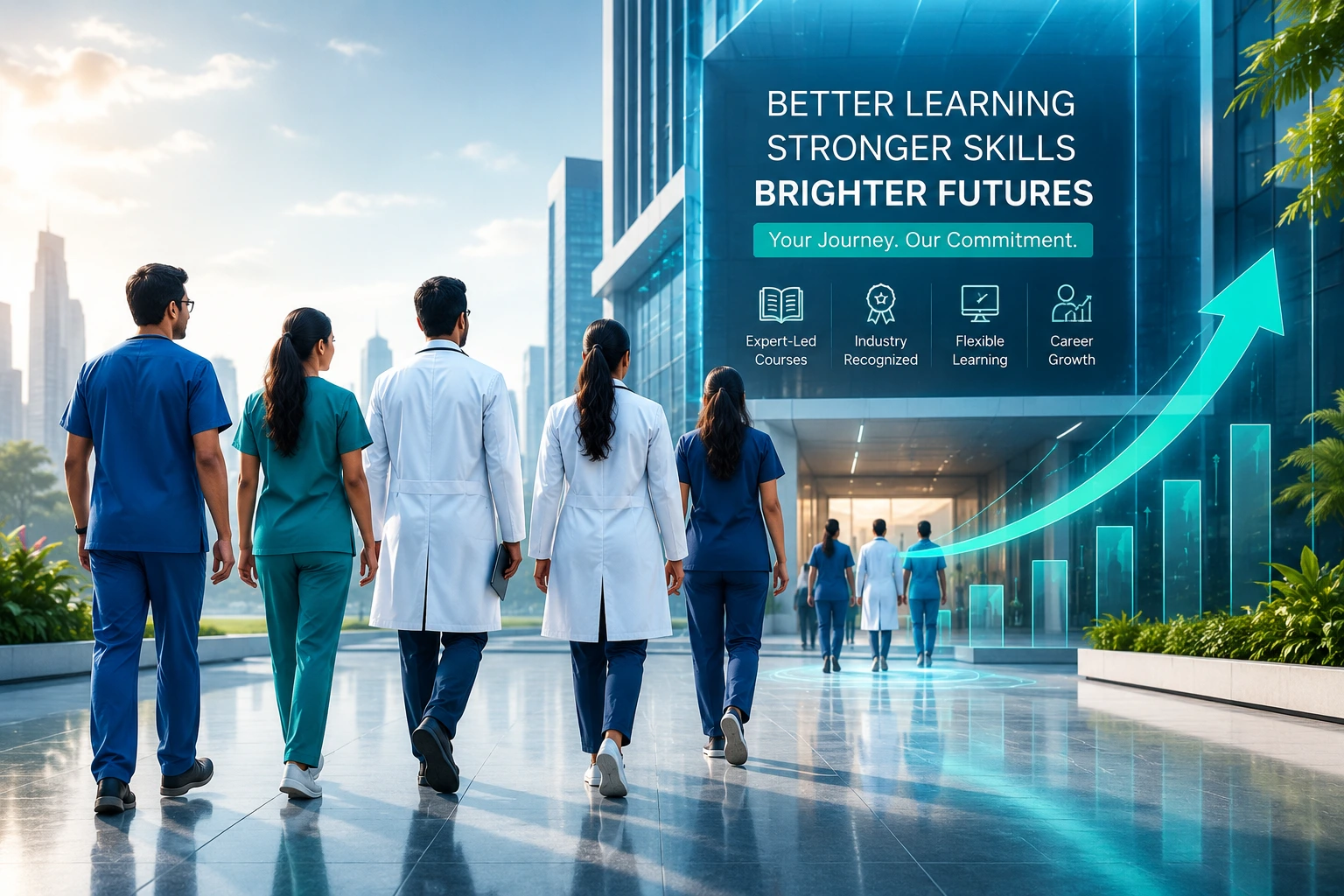
The healthcare industry is evolving faster than ever before. Advances in medical technology, artificial intelligence, digital health, telemedicine, simulation-based training, and changing patient expectations are reshaping the way healthcare professionals work. In this rapidly changing environment, relying solely on formal education obtained years ago is no longer enough.
For doctors, nurses, embryologists, andrology specialists, allied healthcare professionals, and hospital administrators, continuous learning has become a career necessity rather than an optional activity.
Why Future-Proofing Matters
Healthcare systems worldwide are facing a significant workforce challenge. The World Health Organization estimates a global shortage of approximately 11 million health workers by 2030, highlighting the growing demand for skilled healthcare professionals. At the same time, healthcare employers are increasingly seeking professionals with specialized expertise and updated competencies.
India is also witnessing rapid growth in healthcare infrastructure, medical education, and specialized healthcare services. Government initiatives to increase medical education capacity and healthcare access are creating new opportunities for professionals who invest in skill development.
The Rise of Lifelong Learning in Healthcare
The concept of lifelong learning has become central to healthcare practice. Clinical knowledge, treatment protocols, technologies, and regulatory requirements continue to evolve.
Healthcare organizations are increasingly investing in:
- Continuing Medical Education (CME)
- Fellowship programmes
- Clinical skill enhancement courses
- Simulation-based training
- Digital health and AI education
- Leadership and management development
Research continues to show that structured upskilling programmes improve workforce readiness, clinical competency, and career progression opportunities for healthcare professionals.
Key Skills Healthcare Professionals Need in 2026
1. Clinical Specialization
Healthcare is becoming increasingly specialized.
Professionals who pursue advanced certifications and fellowships often gain:
- Greater career opportunities
- Higher professional recognition
- Improved clinical confidence
- Better patient outcomes
Examples include:
- Clinical Embryology
- Reproductive Medicine
- Andrology
- Obstetric Anaesthesia
- Hysteroscopy & Laparoscopy
- Nursing Specializations
- CSSD and Hospital Operations
Specialized expertise helps professionals stand out in a competitive healthcare landscape.
2. Digital Health Literacy
Electronic health records, telemedicine, AI-assisted diagnostics, and digital patient engagement tools are becoming part of everyday healthcare delivery.
Leading healthcare institutions are actively exploring AI applications to improve efficiency and reduce administrative workload for clinicians.
Healthcare professionals who understand:
- Digital documentation
- Telehealth platforms
- AI-assisted workflows
- Healthcare data interpretation
will be better positioned for future roles.
3. Interdisciplinary Collaboration
Modern healthcare increasingly relies on multidisciplinary teams.
Doctors, nurses, embryologists, technicians, administrators, and allied health professionals must work together to deliver optimal patient outcomes.
Studies show that collaborative learning and interdisciplinary healthcare environments improve communication, decision-making, and patient safety.
Strong teamwork skills are becoming just as important as technical expertise.
4. Communication and Patient Engagement
Today’s patients are more informed than ever.
Healthcare professionals are expected to:
- Explain complex information clearly
- Build patient trust
- Deliver empathetic care
- Participate in shared decision-making
Strong communication skills contribute significantly to patient satisfaction and clinical success.
5. Global Readiness
Healthcare is increasingly global.
Many professionals are exploring:
- International certifications
- Fellowship programmes
- Global career opportunities
- Overseas licensing pathways
India has significant potential to become a global healthcare talent hub, but professionals must be prepared with internationally relevant skills and certifications.
The Role of Certifications and Fellowship Programmes
Short-term, focused learning programmes are becoming increasingly popular among working professionals.
Unlike traditional degree programmes, certifications and fellowships offer:
- Practical learning
- Flexible schedules
- Industry relevance
- Immediate workplace application
Healthcare employers increasingly value professionals who demonstrate a commitment to continuous professional development through recognized training programmes.
How to Build a Future-Proof Career
Healthcare professionals can take simple steps today:
Stay Updated
Attend webinars, conferences, workshops, and industry events regularly.
Pursue Specialized Training
Identify emerging areas relevant to your profession and pursue targeted certifications.
Build a Professional Network
Engage with peers, mentors, faculty members, and industry experts.
Develop Digital Competencies
Learn to work effectively with modern healthcare technologies.
Commit to Continuous Learning
Allocate time each year for structured professional development.
Final Thoughts
The future belongs to healthcare professionals who embrace continuous learning and adaptability. Clinical excellence will always remain important, but future success will increasingly depend on the ability to learn, evolve, and acquire new competencies throughout one’s career.
As healthcare continues to transform, professionals who invest in upskilling, specialization, and lifelong learning will be best positioned to deliver better patient outcomes, advance their careers, and contribute meaningfully to the future of healthcare.